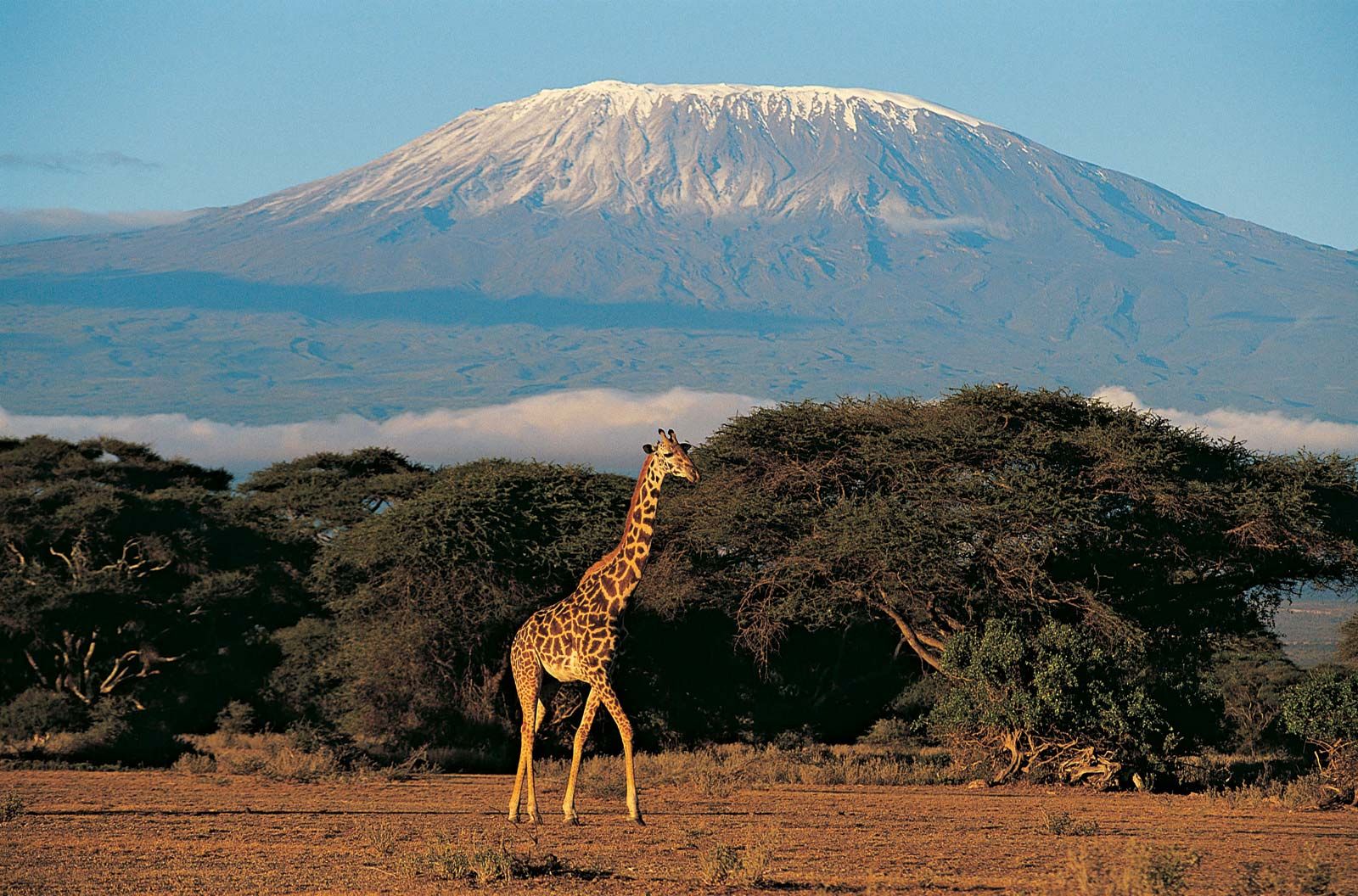
The Roof of Africa & Endless Plains,Your Ultimate Safari Guide to Tanzania
April 25, 2026
Tanzania is not merely a destination; it is a primal pulse that echoes through the savannah. It’s the thunderous hooves of over a million wildebeest carving ancient paths across the Serengeti, the serene majesty of the world’s largest intact volcanic caldera, and the quiet, oxygen-starved triumph of standing atop the "Roof of Africa."
In a world of curated travel experiences, Tanzania remains gloriously raw and untamed. It offers the apex of wildlife viewing combined with one of earth’s most achievable bucket-list climbs. If the "Land of a Thousand Hills" offered you intimacy, Tanzania offers you the infinite stage. Here are some of the places you would not want to miss.
Serengeti National Park: The Stage of the Great Migration
Location: Northern Tanzania (bordering Kenya’s Maasai Mara)
Best For: The Great Migration, Big Five encounters & predator action
To say the Serengeti is a "national park" is like saying the ocean is a "swimming pool." It is an ancient, endless ecosystem of 15,000 square kilometers that hosts the last great terrestrial migration on Earth. This is the quintessential African safari vast horizons dotted with acacia trees where lions laze on rocky outcrops (kopjes) and cheetahs sprint across open plains.
The Great Migration: Nature’s Greatest Spectacle
The lifeblood of the Serengeti is the Great Migration. Every year, over 1.5 million wildebeest, accompanied by 200,000 zebra and 300,000 gazelles, rotate in a perpetual, clockwise loop driven by the rains.
Calving Season (December – March): The southern Serengeti (Ndutu region) turns into a nursery. Around 8,000 wildebeest calves are born daily, leading to intense predator-prey action as lions and cheetahs close in on the vulnerable newborns.
River Crossings (July – October): The dramatic crescendo occurs in the north. The herds mass at the Mara and Grumeti Rivers, hesitating before plunging into waters teeming with colossal Nile crocodiles. It is heart-stopping, chaotic, and utterly mesmerizing.
Beyond the Herds
The Serengeti supports roughly 3,500 lions, 7,000 elephants, and thriving populations of leopards, spotted hyenas, and endangered African wild dogs. The central Seronera Valley is a year-round predator hotspot with resident game viewing that never disappoints.
Top Signature Experiences:
· Hot Air Balloon Safari: Float silently above the plains at sunrise, drifting with the herds before landing for a champagne breakfast in the bush.
· Full-Day Game Drives: Explore the different sectors of the park, from the acacia-dotted central plains to the riverine woodlands of the north.
· Night Game Drives (in private concessions): Witness the secretive nocturnal world of leopards, hyenas, and bushbabies.
· Walking Safaris: Track animals on foot with an armed ranger to learn the subtle art of reading spoor and scat.
Tip: The Serengeti is vast. Do not try to "do it all" in two days. Fly into a specific airstrip (South, Central, or North) and stay 3-4 nights in mobile camps that follow the migration. Note: Overcrowding at river crossings is being addressed; choose a responsible operator who follows TANAPA protocols to avoid the "viewing stampede".
Ngorongoro Crater: The Garden of Eden Enclosed
Location: Ngorongoro Conservation Area (adjacent to Serengeti)
Best For: Guaranteed Big Five viewing & breathtaking vistas
Millions of years ago, a volcano the size of Mount Kilimanjaro erupted and collapsed in on itself, creating the Ngorongoro Crater the largest unflooded caldera on earth. Today, 600-meter-high walls enclose a self-contained world, creating a wildlife density so high it looks like a scene from a nature documentary.
The Crater Floor Safari
Descending the steep walls into the crater is a surreal experience. You pass through misty highland forest onto the short-grass plains of the floor. Because it is an enclosed ecosystem, the animals cannot migrate out. You will find a "carpet" of wildebeest, zebra, eland, and gazelle watched hungrily by the highest density of lions in the world.
The Black Rhino Sanctuary
While the Big Five (lion, elephant, buffalo, leopard, rhino) are present, Ngorongoro is revered as the best place in East Africa to spot the critically endangered black rhino. The crater floor supports a significant breeding population that you can see grazing openly in the daylight—a rarity elsewhere.
Top Signature Experiences:
· Crater Floor Game Drive: Spend 4-6 hours on the floor visiting Lake Magadi (flamingos), the Gorigor Swamp (big-tusked elephants), and the Lerai Forest (leopards and baboons).
· Highland Hikes: Trek Olmoti Crater to see its stunning waterfall or Empakai Crater to view a deep lake surrounded by emerald walls.
· Maasai Cultural Visits: The Ngorongoro Conservation Area is unique because the Maasai people live alongside the wildlife. A visit to a boma (village) offers a humbling look at a co-existence that has lasted centuries.
Tip: Stay in a lodge on the crater rim. This allows you to be the first vehicle down the descent road at 6:00 AM and the last one up at sunset, avoiding the long queues of day-trippers from Arusha.
Mount Kilimanjaro: The Roof of Africa & The Climber’s Dream
Location: Northeastern Tanzania (near Moshi)
Best For: High-altitude trekking & bucket-list summiting
Rising 5,895 meters (19,341 feet) above the flat savannah plains, Mount Kilimanjaro is the highest free-standing mountain in the world and the tallest peak in Africa. Unlike the technical rigors of Everest, "Kili" requires no ropes or mountaineering experience, making it the most accessible of the Seven Summits. Yet, it is no walk in the park.
Choosing Your Path to the Summit
You don’t "climb" Kilimanjaro so much as trek it. You will pass through five distinct ecological zones in a few days: from tropical farmland, through misty rainforest, across heather moorland, into the stark alpine desert, and finally onto the arctic glacial summit zone at Uhuru Peak.
The Golden Rule of Kilimanjaro: More days = higher success rate.
· Marangu Route ("Coca-Cola Route") (5–6 Days): The only route with hut accommodation. Comfortable but very rushed, leading to a lower summit success (50-65%).
· Machame Route ("Whiskey Route") (6–7 Days): The most popular and scenic path. Tough but rewarding with a 70-85% success rate due to the "climb high, sleep low" profile.
· Lemosho Route (7–9 Days): Our top recommendation for first-timers. Starts with a remote trek through untouched forest before joining the main trail, offering excellent acclimatization and an 85-90% summit success.
· Northern Circuit (9–10 Days): The longest route, hugging the north side of the mountain. Very quiet wilderness with the highest success rate approaching 95-98%.
The Uhuru Peak Moment
The final push is brutal. You wake up around midnight to climb from 4,000m to 5,895m in freezing darkness. You will breathe roughly 50% less oxygen than at sea level. Then, just as you think you cannot go on, the sun rises over the Mawenzi peak, casting gold across the curvature of the earth, and you plant your feet on the snowy summit of Africa.
Top Signature Experiences:
· Summit Night: The grueling but life-changing trek to Uhuru Peak to watch the sunrise from the "Roof of Africa."
· Shira Plateau: The remnants of the ancient crater; a vast, eerie high-altitude desert.
· Barranco Wall: A fun, non-technical scramble (women and children have done it!) with incredible photo opportunities.
Tip: Do not underestimate the altitude. "Pole, pole" (Swahili for "slowly, slowly") is the law. Opt for an 8-day Lemosho itinerary rather than a 5-day Marangu hike. It costs more but doubles your chance of success and saves you the regret of turning back.
Planning Your Tanzanian Safari
When to Go
· Dry Season (June – October): The prime time for safaris in the Serengeti and Ngorongoro. Wildlife concentrates around water sources, and the spectacular river crossings occur in the northern Serengeti. Also ideal for clear-weather Kilimanjaro climbs.
· Calving Season (December – March): Lush green landscapes, dramatic predator action in the southern Serengeti, and superb bird watching for migratory species, plus excellent conditions for trekking on Kilimanjaro.
The Ultimate Add-On: Safari & Beach
One of Tanzania’s great logistical advantages is its proximity to paradise. After your dusty safari or your grueling mountain climb, you can fly from Arusha or Kilimanjaro directly to Zanzibar in just 1-1.5 hours.
· The Perfect Flow: 7 days on the Northern Safari Circuit + 4 nights on Zanzibar’s white-sand beaches.
· What to do: Unwind in Nungwi, explore the historical alleys of Stone Town (a UNESCO World Heritage Site), snorkel the coral reefs of Mnemba Atoll, or visit the Jozani Forest to see the rare red colobus monkeys. It is the ultimate way to recover from the "sensory overload" of the plains.
Conservation Watch
Tanzania takes its natural heritage seriously. The Tanzania National Parks Authority (TANAPA) is actively working to reduce vehicle overcrowding at the Mara River crossings and fight poaching. Choose eco-certified lodges and operators who contribute to the local economies of the communities living on the borders of these great parks.
Why Tanzania Stands Alone
Rwanda offers the intimate mist of the gorillas. The DRC offers the raw, dangerous edge of the true wild. Tanzania offers the epic blockbuster.
It is the animal kingdom’s greatest stage. Whether it is the gnashing teeth of a crocodile during the Mara River crossing, the golden mane of a lion against the setting sun over the Ngorongoro Rim, or the tears freezing on your cheeks as you stand at 19,341 feet, Tanzania delivers moments that are etched permanently into your soul.
Go for the wildlife. Stay for the beaches. Leave with your heart full of the safari the Swahili word for "journey" itself.
Book your safari now
Call / WhatsApp: (+256) 700135510
Email: info@gorillatrekkingbooking.com
Visit us: www.gorillatrekkingbooking.com
In a world of curated travel experiences, Tanzania remains gloriously raw and untamed. It offers the apex of wildlife viewing combined with one of earth’s most achievable bucket-list climbs. If the "Land of a Thousand Hills" offered you intimacy, Tanzania offers you the infinite stage. Here are some of the places you would not want to miss.
Serengeti National Park: The Stage of the Great Migration
Location: Northern Tanzania (bordering Kenya’s Maasai Mara)
Best For: The Great Migration, Big Five encounters & predator action
To say the Serengeti is a "national park" is like saying the ocean is a "swimming pool." It is an ancient, endless ecosystem of 15,000 square kilometers that hosts the last great terrestrial migration on Earth. This is the quintessential African safari vast horizons dotted with acacia trees where lions laze on rocky outcrops (kopjes) and cheetahs sprint across open plains.
The Great Migration: Nature’s Greatest Spectacle
The lifeblood of the Serengeti is the Great Migration. Every year, over 1.5 million wildebeest, accompanied by 200,000 zebra and 300,000 gazelles, rotate in a perpetual, clockwise loop driven by the rains.
Calving Season (December – March): The southern Serengeti (Ndutu region) turns into a nursery. Around 8,000 wildebeest calves are born daily, leading to intense predator-prey action as lions and cheetahs close in on the vulnerable newborns.
River Crossings (July – October): The dramatic crescendo occurs in the north. The herds mass at the Mara and Grumeti Rivers, hesitating before plunging into waters teeming with colossal Nile crocodiles. It is heart-stopping, chaotic, and utterly mesmerizing.
Beyond the Herds
The Serengeti supports roughly 3,500 lions, 7,000 elephants, and thriving populations of leopards, spotted hyenas, and endangered African wild dogs. The central Seronera Valley is a year-round predator hotspot with resident game viewing that never disappoints.
Top Signature Experiences:
· Hot Air Balloon Safari: Float silently above the plains at sunrise, drifting with the herds before landing for a champagne breakfast in the bush.
· Full-Day Game Drives: Explore the different sectors of the park, from the acacia-dotted central plains to the riverine woodlands of the north.
· Night Game Drives (in private concessions): Witness the secretive nocturnal world of leopards, hyenas, and bushbabies.
· Walking Safaris: Track animals on foot with an armed ranger to learn the subtle art of reading spoor and scat.
Tip: The Serengeti is vast. Do not try to "do it all" in two days. Fly into a specific airstrip (South, Central, or North) and stay 3-4 nights in mobile camps that follow the migration. Note: Overcrowding at river crossings is being addressed; choose a responsible operator who follows TANAPA protocols to avoid the "viewing stampede".
Ngorongoro Crater: The Garden of Eden Enclosed
Location: Ngorongoro Conservation Area (adjacent to Serengeti)
Best For: Guaranteed Big Five viewing & breathtaking vistas
Millions of years ago, a volcano the size of Mount Kilimanjaro erupted and collapsed in on itself, creating the Ngorongoro Crater the largest unflooded caldera on earth. Today, 600-meter-high walls enclose a self-contained world, creating a wildlife density so high it looks like a scene from a nature documentary.
The Crater Floor Safari
Descending the steep walls into the crater is a surreal experience. You pass through misty highland forest onto the short-grass plains of the floor. Because it is an enclosed ecosystem, the animals cannot migrate out. You will find a "carpet" of wildebeest, zebra, eland, and gazelle watched hungrily by the highest density of lions in the world.
The Black Rhino Sanctuary
While the Big Five (lion, elephant, buffalo, leopard, rhino) are present, Ngorongoro is revered as the best place in East Africa to spot the critically endangered black rhino. The crater floor supports a significant breeding population that you can see grazing openly in the daylight—a rarity elsewhere.
Top Signature Experiences:
· Crater Floor Game Drive: Spend 4-6 hours on the floor visiting Lake Magadi (flamingos), the Gorigor Swamp (big-tusked elephants), and the Lerai Forest (leopards and baboons).
· Highland Hikes: Trek Olmoti Crater to see its stunning waterfall or Empakai Crater to view a deep lake surrounded by emerald walls.
· Maasai Cultural Visits: The Ngorongoro Conservation Area is unique because the Maasai people live alongside the wildlife. A visit to a boma (village) offers a humbling look at a co-existence that has lasted centuries.
Tip: Stay in a lodge on the crater rim. This allows you to be the first vehicle down the descent road at 6:00 AM and the last one up at sunset, avoiding the long queues of day-trippers from Arusha.
Mount Kilimanjaro: The Roof of Africa & The Climber’s Dream
Location: Northeastern Tanzania (near Moshi)
Best For: High-altitude trekking & bucket-list summiting
Rising 5,895 meters (19,341 feet) above the flat savannah plains, Mount Kilimanjaro is the highest free-standing mountain in the world and the tallest peak in Africa. Unlike the technical rigors of Everest, "Kili" requires no ropes or mountaineering experience, making it the most accessible of the Seven Summits. Yet, it is no walk in the park.
Choosing Your Path to the Summit
You don’t "climb" Kilimanjaro so much as trek it. You will pass through five distinct ecological zones in a few days: from tropical farmland, through misty rainforest, across heather moorland, into the stark alpine desert, and finally onto the arctic glacial summit zone at Uhuru Peak.
The Golden Rule of Kilimanjaro: More days = higher success rate.
· Marangu Route ("Coca-Cola Route") (5–6 Days): The only route with hut accommodation. Comfortable but very rushed, leading to a lower summit success (50-65%).
· Machame Route ("Whiskey Route") (6–7 Days): The most popular and scenic path. Tough but rewarding with a 70-85% success rate due to the "climb high, sleep low" profile.
· Lemosho Route (7–9 Days): Our top recommendation for first-timers. Starts with a remote trek through untouched forest before joining the main trail, offering excellent acclimatization and an 85-90% summit success.
· Northern Circuit (9–10 Days): The longest route, hugging the north side of the mountain. Very quiet wilderness with the highest success rate approaching 95-98%.
The Uhuru Peak Moment
The final push is brutal. You wake up around midnight to climb from 4,000m to 5,895m in freezing darkness. You will breathe roughly 50% less oxygen than at sea level. Then, just as you think you cannot go on, the sun rises over the Mawenzi peak, casting gold across the curvature of the earth, and you plant your feet on the snowy summit of Africa.
Top Signature Experiences:
· Summit Night: The grueling but life-changing trek to Uhuru Peak to watch the sunrise from the "Roof of Africa."
· Shira Plateau: The remnants of the ancient crater; a vast, eerie high-altitude desert.
· Barranco Wall: A fun, non-technical scramble (women and children have done it!) with incredible photo opportunities.
Tip: Do not underestimate the altitude. "Pole, pole" (Swahili for "slowly, slowly") is the law. Opt for an 8-day Lemosho itinerary rather than a 5-day Marangu hike. It costs more but doubles your chance of success and saves you the regret of turning back.
Planning Your Tanzanian Safari
When to Go
· Dry Season (June – October): The prime time for safaris in the Serengeti and Ngorongoro. Wildlife concentrates around water sources, and the spectacular river crossings occur in the northern Serengeti. Also ideal for clear-weather Kilimanjaro climbs.
· Calving Season (December – March): Lush green landscapes, dramatic predator action in the southern Serengeti, and superb bird watching for migratory species, plus excellent conditions for trekking on Kilimanjaro.
The Ultimate Add-On: Safari & Beach
One of Tanzania’s great logistical advantages is its proximity to paradise. After your dusty safari or your grueling mountain climb, you can fly from Arusha or Kilimanjaro directly to Zanzibar in just 1-1.5 hours.
· The Perfect Flow: 7 days on the Northern Safari Circuit + 4 nights on Zanzibar’s white-sand beaches.
· What to do: Unwind in Nungwi, explore the historical alleys of Stone Town (a UNESCO World Heritage Site), snorkel the coral reefs of Mnemba Atoll, or visit the Jozani Forest to see the rare red colobus monkeys. It is the ultimate way to recover from the "sensory overload" of the plains.
Conservation Watch
Tanzania takes its natural heritage seriously. The Tanzania National Parks Authority (TANAPA) is actively working to reduce vehicle overcrowding at the Mara River crossings and fight poaching. Choose eco-certified lodges and operators who contribute to the local economies of the communities living on the borders of these great parks.
Why Tanzania Stands Alone
Rwanda offers the intimate mist of the gorillas. The DRC offers the raw, dangerous edge of the true wild. Tanzania offers the epic blockbuster.
It is the animal kingdom’s greatest stage. Whether it is the gnashing teeth of a crocodile during the Mara River crossing, the golden mane of a lion against the setting sun over the Ngorongoro Rim, or the tears freezing on your cheeks as you stand at 19,341 feet, Tanzania delivers moments that are etched permanently into your soul.
Go for the wildlife. Stay for the beaches. Leave with your heart full of the safari the Swahili word for "journey" itself.
Book your safari now
Call / WhatsApp: (+256) 700135510
Email: info@gorillatrekkingbooking.com
Visit us: www.gorillatrekkingbooking.com